After the previous week’s ASME PVHO meeting, the company DEEP invited the PVHO members to visit their manufacturing facility in Bristol and their diving campus in the Wye Valley adjacent to the Welsh border. DEEP is an ocean technology and exploration company based near Bristol, aiming to establish a permanent human presence underwater by 2027. Of particular interest to the PVHO members is that DEEP Manufacturing is using additive manufacturing to create the steel pressure chambers. Robotic welders build up the various shapes, allowing pressure vessel shells to be fabricated faster than conventional means. The DEEP Manufacturing team shared their evolutions in processes, weldments, and testing, which culminated in DNV approval in principle for Class certification. The DEEP Manufacturing team is focused on ensuring all systems are thoroughly tested and then reviewed and qualified by recognized third party. DNV is one of the world’s leading classification societies. All systems will still have to be individually qualified and reviewed, but their process for additive welding is now an authorized method and one of the first of its kind to pass this kind of scrutiny.
The DEEP Campus is adjacent to the flooded quarry that is the former National Diving and Activity Centre (NDAC) in Tidenham, Gloucestershire. This has recieved national coverage. The DEEP Campus is where DEEP will first build their test base, which will be land-based mock-up of the underwater facility to be placed into the quarry. This will allow DEEP to work out their processes and procedures for living in the “Sentinel System” modular underwater habitats, including the moonpool and lock in/lock out chamber. Going forward, it will be the training center for people preparing to live in the Sentinel System. Eventually, the training facility with be training people to live and work underwater in the DEEP-built and installed facilities around the world. It will also provide training for their “VANGUARD System“, which is a two-section, 3-person transportable system for shorter missions that will be in working prototype off the US eastern coast. Krista Kemper and Bart Kemper toured both facilities and asked many questions, as did other ASME PVHO members.
“I can’t see the future, but it probably looks a lot like this,” said Krista Wohfeil, the newly appointed chair of the ASME PVHO Quality Control Subcommittee.
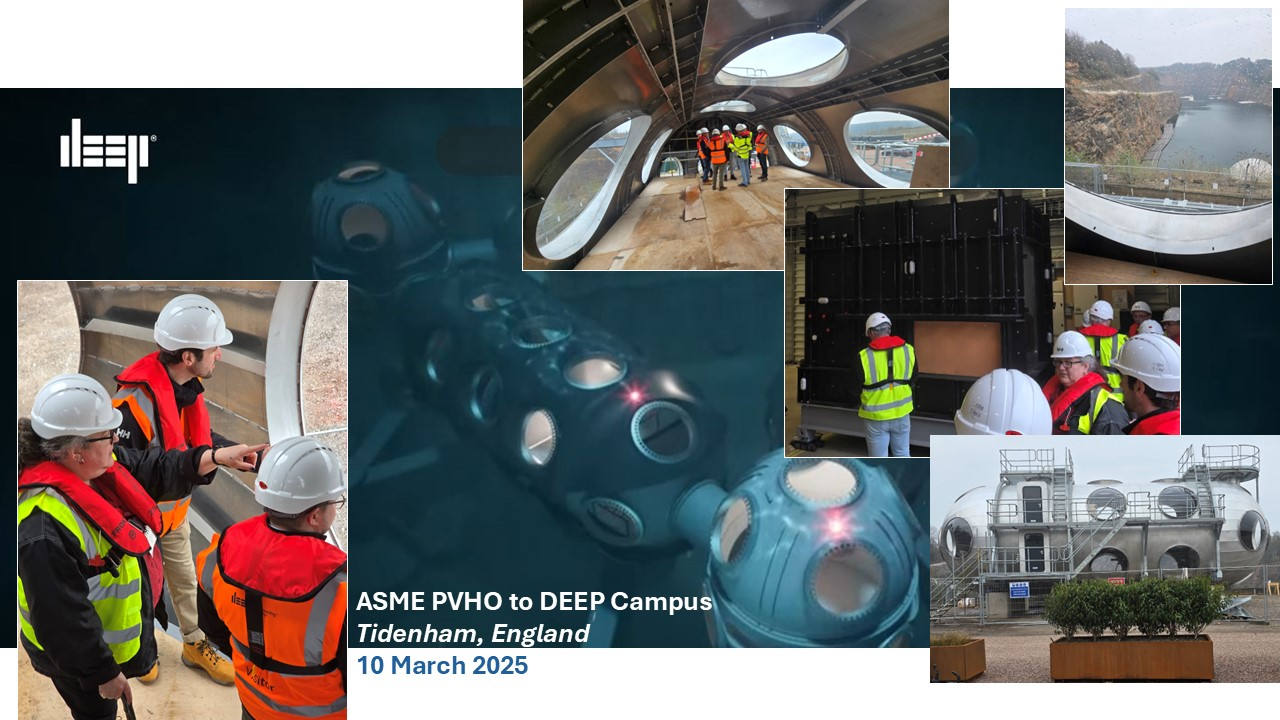
Krista Kemper, Bart Kemper, and other members of ASME PVHO visited the DEEP campus, exploring the dry land trainer, is still under construction. The far left shows Krista talking to DEEP’s president Sean Wolpert, pointing at the quarry just outside the habitat trainer. The middle right image is the protoype VANGUARD moonpool module, a square pressure vessel that had just been successfully tested. The background image is from the DEEP’s concept of the SENTINEL system.
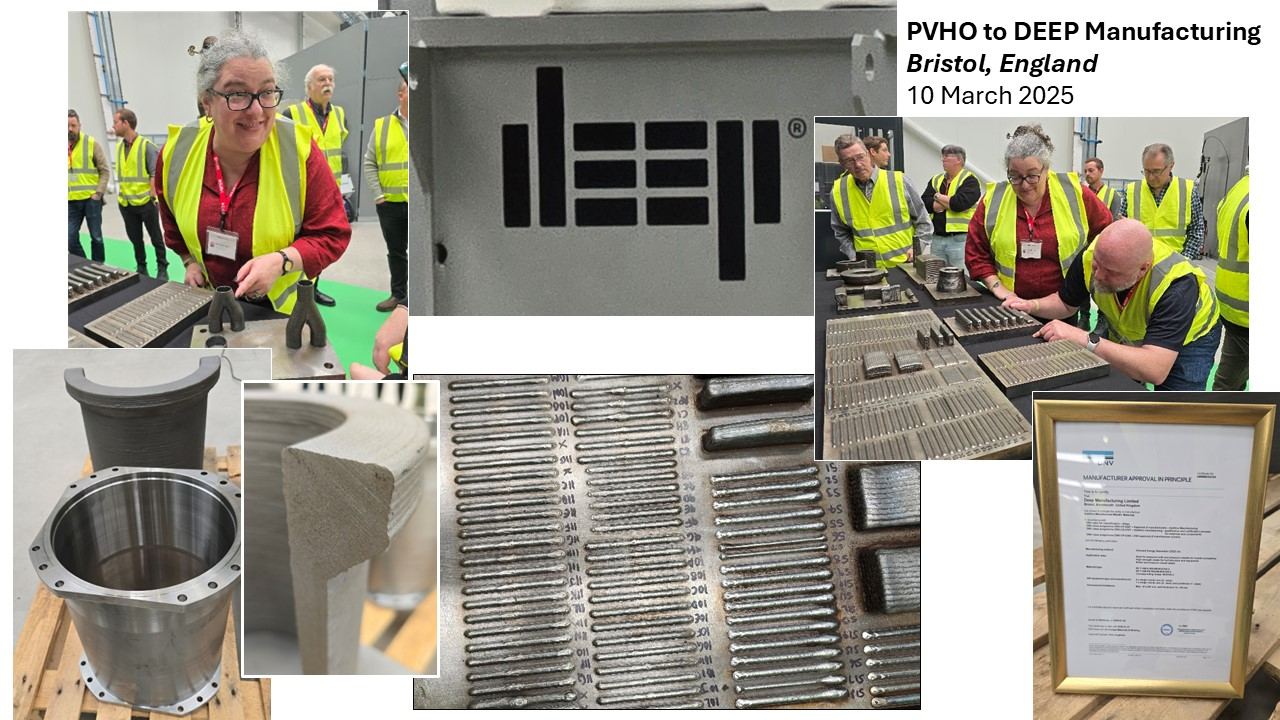
Krista Kemper, Bart Kemper, and other members of ASME PVHO are shown how DEEP Manufacturing has evolved additive manufacturing to pressure vessel quality work. The DNV certificate is displayed in the bottom right image.
Recent Comments