KES’s principal engineer, Bart Kemper P.E., DFE was part of an ASME career resource webinar titled “AI in Engineering: A panel discussion on the future of Competency, Licensure, and Innovation.” The panel was hosted by Nick Heims, P.E. of the Engineering Management Institute shared with Waseem Ansari, P.E. (CEO of QED Global Solutions in Houston, TX) and Kenneth Shultz, P.E. (CEO of PermitZip in Richmond, VA). The webinar reached a peak of over 200 attendees during the live phase and another 200 in the week following. The overwhelming consensus was that AI is a critical tool all engineers need to understand, but the engineer must take responsibility for the work the same way you would if it were an intern.
The other key takeaway is the Cyber-Informed Engineering (CIE) is a vital life-safety pespective that all engineers need to incorporate into their thinking to help safeguard all infrastructure, from civil to transportation to the electrical grid to the internet. CIE is not “cybersecurity”. It is having engineers treat cyber issues in the same way they treat any other load or environmental factor in their design. If a snow load doesn’t apply, you don’t need to add it to your load but you must still address that section in the engineering code. For CIE, it is “do I really need internet connectivy to make this work”, and if the answer is yes, then “how do we regain control of the system if it is hacked, ransomware’d, or just is too buggy to run.” Thinking of CIE issues throughout the design life cycle increases reliability in the same way thinking of safety (to the public, to the workers, to the project, etc.) improves safety outcomes.

ASME Career Resource webinar. AI in Engineering: A panel discussion on the future of Competency, Licensure, and Innovation
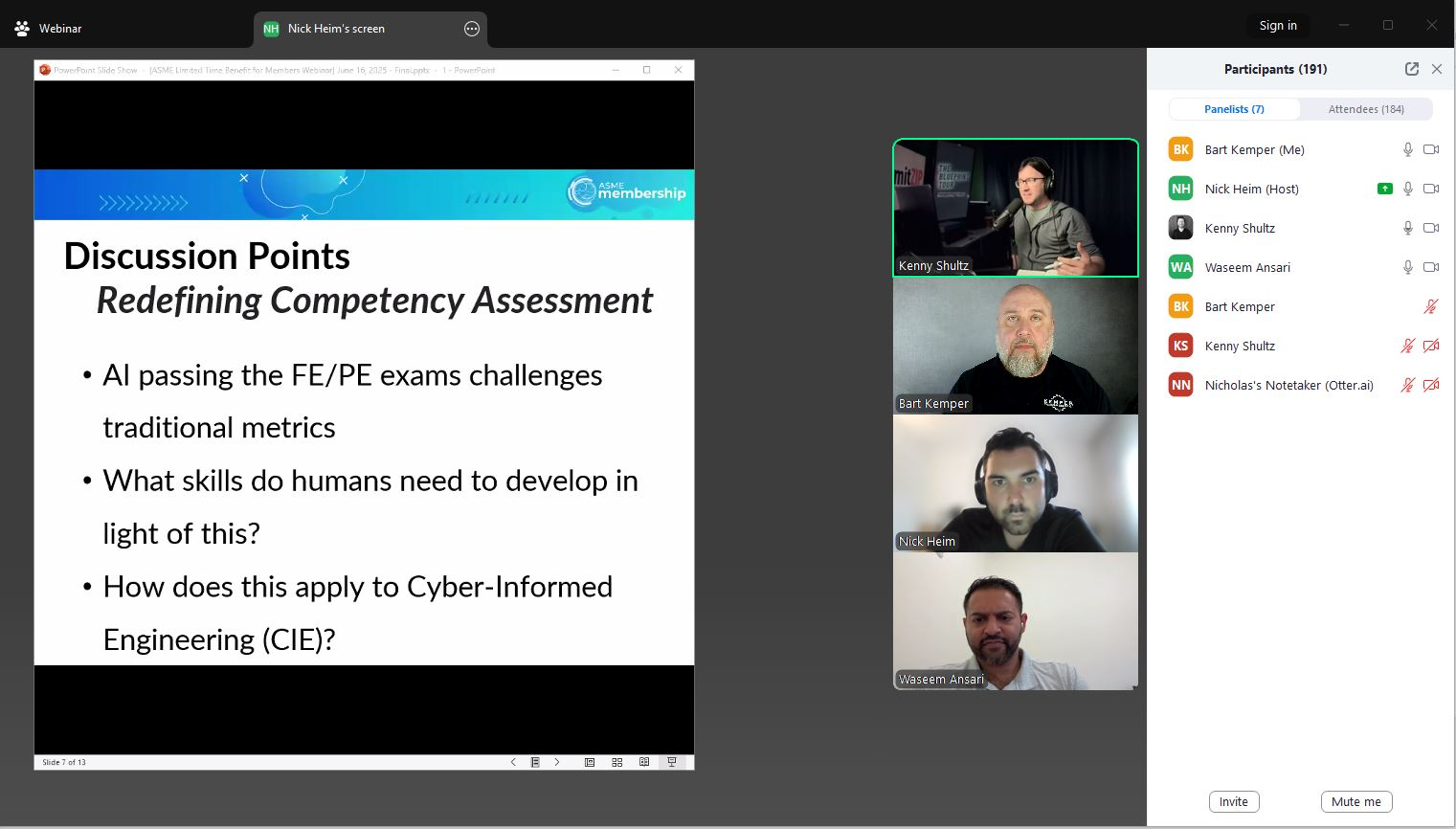
One of the discussion items was Cyber-Informed Engineering (CIE) and how this is no for “cybersecurity people”, but for engineers who are not in cybersecurity.
Recent Comments